Sikun Guo

郭司坤

PhD Candidate in Computer Science, University of Virginia

RealAI Lab, University of Virginia · Advisor: Prof. Aidong Zhang · Charlottesville, VA

Research areas: LLM reasoning, knowledge recruitment and in-context learning, inference-time learning, graph neural networks, AI for Science, and autonomous AI research systems.

Publications

All publications

Publications are listed in reverse chronological order. This page includes both first-author and collaborative work because the research agenda is broader than author position alone.

2026

Ideation methods 2026

Curiosity-Driven Questioning for Engine-Agnostic LLM Research Ideation

Sikun Guo, Di Wang, Xiaohan Fan, Albert Huang and Aidong Zhang

KDD 2026

Studies whether curiosity-oriented questioning can make research ideation with language models more exploratory, engine-agnostic, and practically useful. The method emphasizes question generation, filtering, and clarity scoring before ideas are handed to downstream ideation engines.
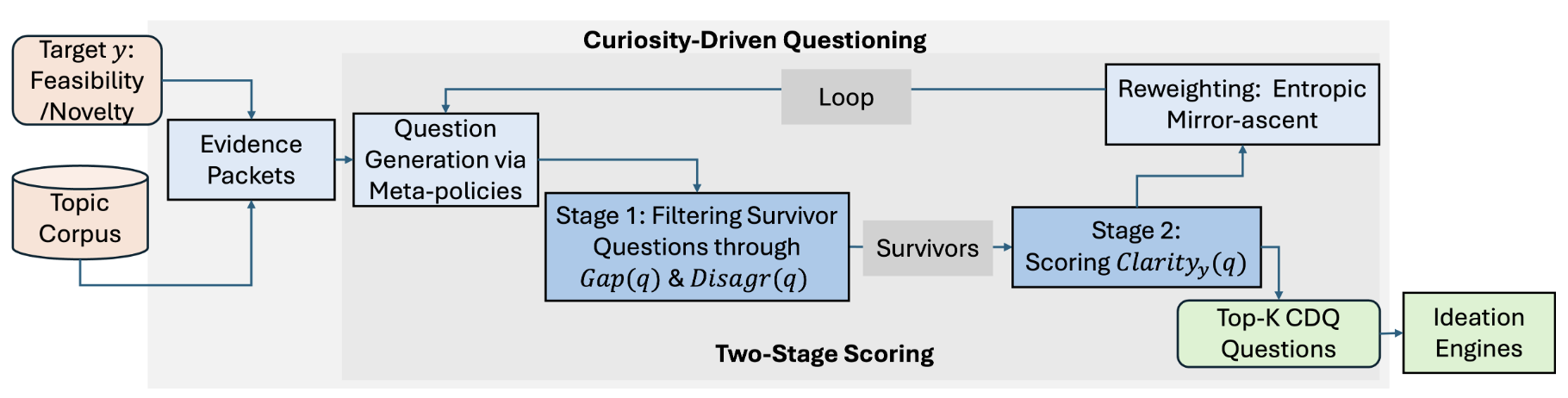
Curiosity-driven questioning pipeline with evidence packets, question generation, filtering through gap and disagreement, clarity scoring, and top-k question selection for ideation engines.
Inference-time learning 2026

InfRL: Inference-time Reinforcement Learning for Research Idea Optimization

Sikun Guo, Amir Hassan Shariatmadari, Jiuqi Wang, Albert Huang, Stefan Bekiranov, Shangtong Zhang and Aidong Zhang

KDD 2026

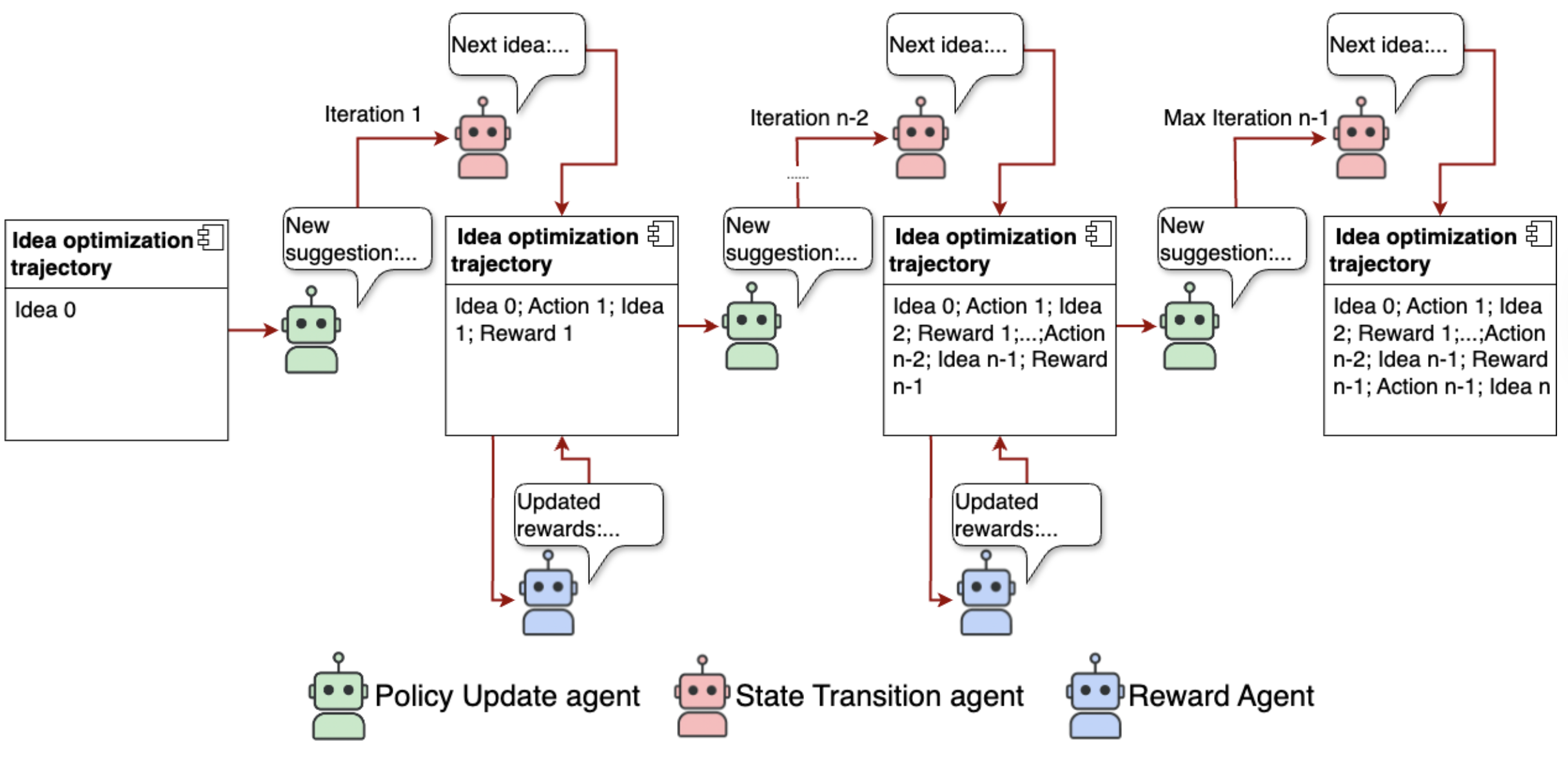
Explores inference-time reinforcement learning as a way to optimize the quality of model-generated research ideas without relying only on larger base models. The project frames idea improvement as a trajectory with actions, rewards, and iterative policy updates at test time.

InfRL figure showing idea optimization trajectory, state transition agent, policy update agent, and reward agent across multiple iterations.

2025

Biomedical hypothesis generation 2025

HyHG: A Temporal Hypergraph Contrastive Learning Framework for Biomedical Hypothesis Generation

Amir Hassan Shariatmadari, Sikun Guo, Nathan C. Sheffield, Aidong Zhang and Kishlay Jha

IEEE ICDM 2025

ICDM 2025 Best Paper Award

HyHG models biomedical hypothesis generation with a temporal hypergraph view of evolving scientific concepts, allowing the system to capture higher-order relations that ordinary pairwise graphs miss. The paper received the ICDM 2025 Best Paper Award, making it a particularly visible result in the structured-scientific-discovery line of work.

Graph-based scientific modeling 2025

ConceptDrift: Leveraging Spatial, Temporal and Semantic Evolution of Biomedical Concepts for Hypothesis Generation

Amir Hassan Shariatmadari, Alireza Jafari, Sikun Guo, Sneha Srinivasan, Nathan C. Sheffield, Aidong Zhang and Kishlay Jha

Bioinformatics 2025

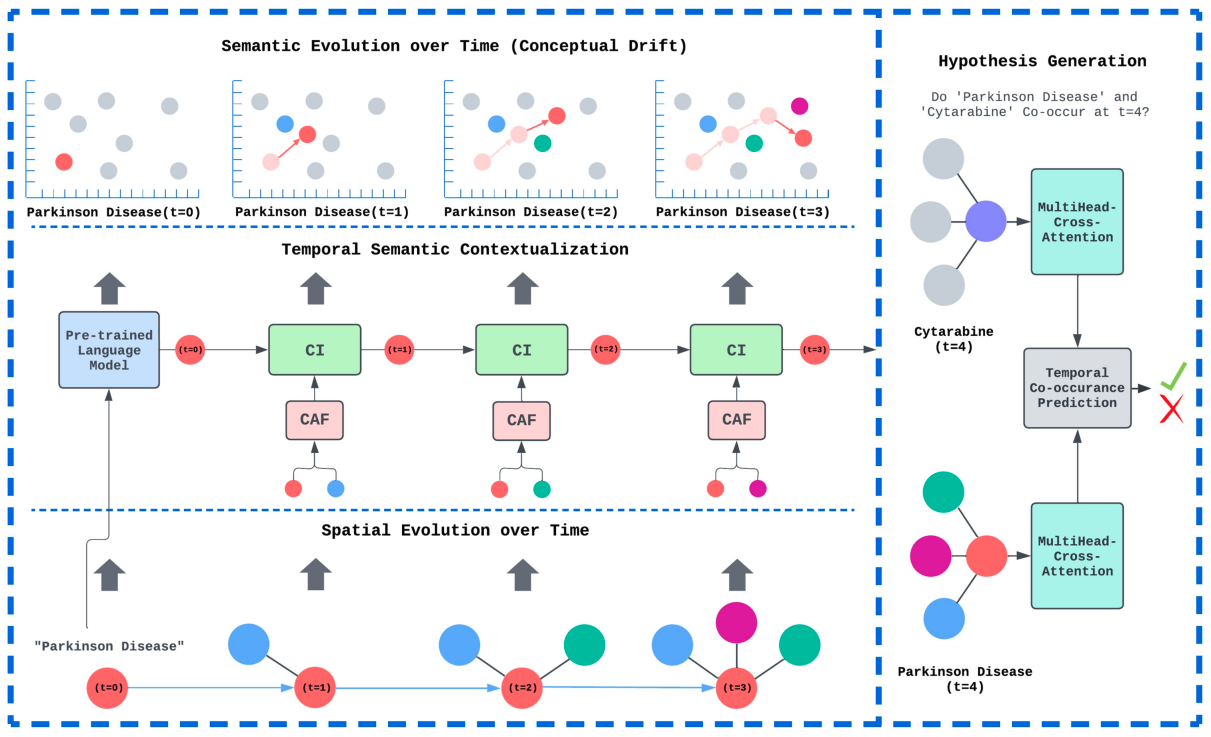
ConceptDrift models biomedical hypothesis generation through the spatial, temporal, and semantic evolution of concepts. It represents a more structured scientific-modeling direction in the broader agenda, showing how graph-based views of evolving knowledge can support discovery.

ConceptDrift figure showing semantic evolution over time, temporal semantic contextualization, spatial evolution, and hypothesis generation.
Inference-time learning 2025

InfAL: Inference Time Adversarial Learning for Improving Research Ideation

Sikun Guo, Amir Hassan Shariatmadari, Peng Wang, Albert Huang and Aidong Zhang

Findings of EMNLP 2025

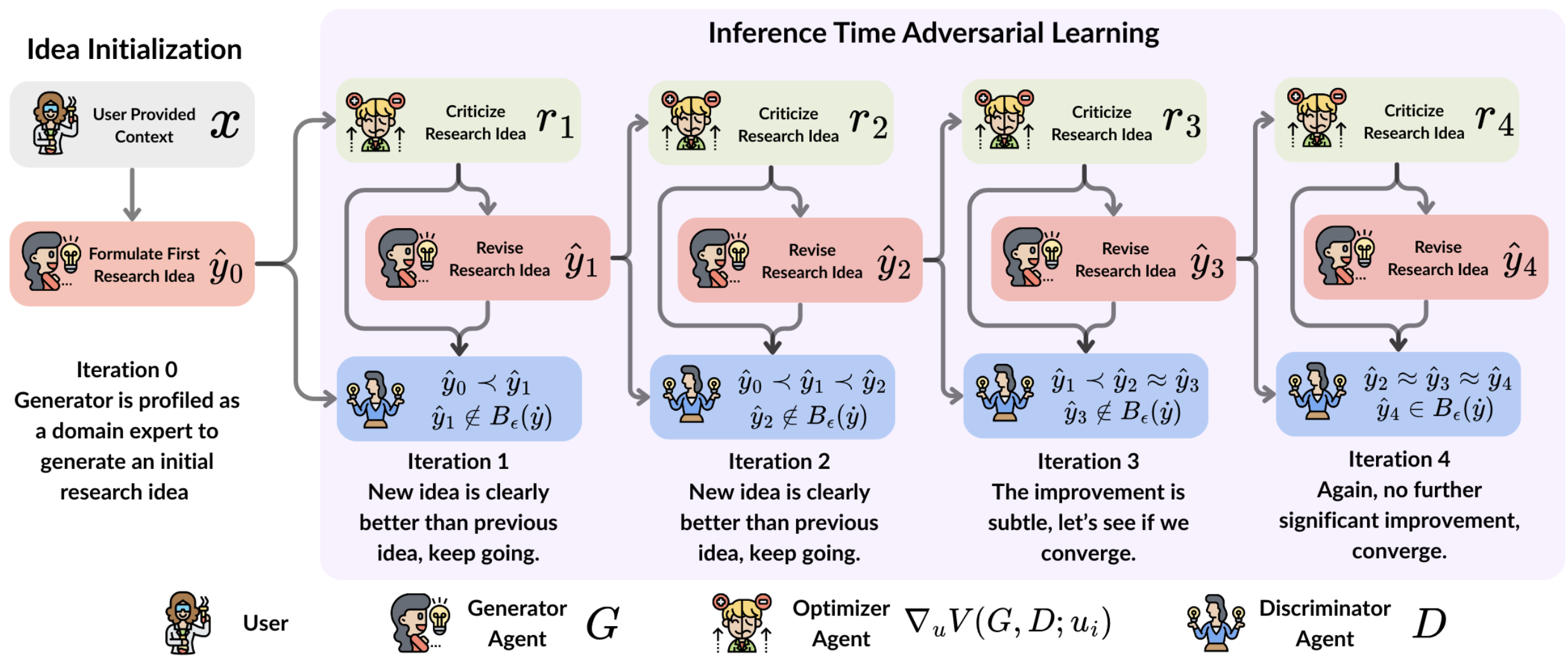
InfAL studies how adversarial learning at inference time can improve the quality of model-generated research ideas without changing the base model weights. The paper pushes research ideation beyond prompt engineering toward explicitly optimized test-time behavior.

InfAL pipeline showing initial idea generation followed by iterative critique, revision, and discriminator-guided improvement across multiple steps.
Benchmark design 2025

IdeaBench: Benchmarking Large Language Models for Research Idea Generation

Sikun Guo, Amir Hassan Shariatmadari, Guangzhi Xiong, Albert Huang, Myles Kim, Corey Williams, Stefan Bekiranov and Aidong Zhang

KDD 2025

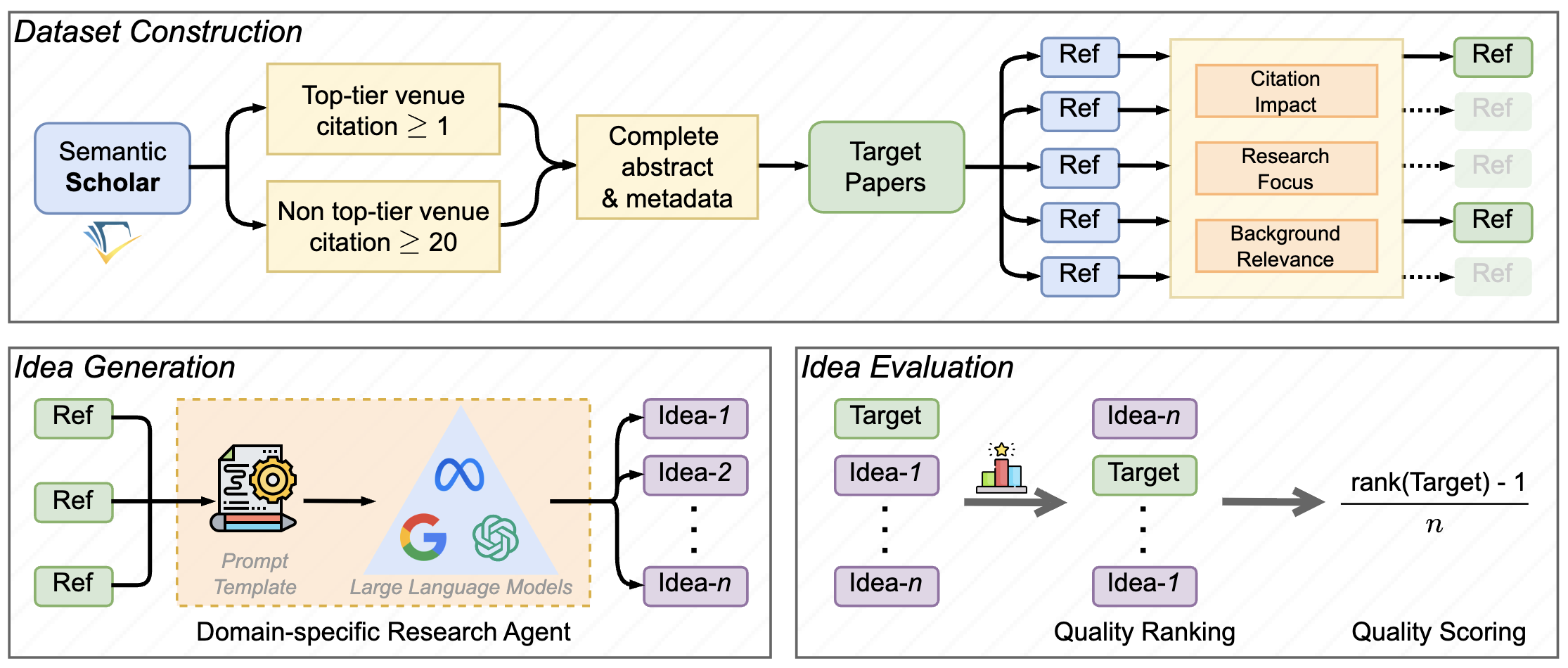
IdeaBench introduces a benchmark and evaluation framework for LLM-based research idea generation. The core contribution is not only a dataset, but also a way to measure whether generated ideas are insightful, plausible, and meaningfully distinct rather than merely well phrased.

IdeaBench pipeline showing dataset construction from Semantic Scholar, idea generation with research agents, and evaluation by quality ranking.
Scientific reasoning evaluation 2025

Toward Reliable Biomedical Hypothesis Generation: Evaluating Truthfulness and Hallucination in Large Language Models

Guangzhi Xiong, Eric Xie, Corey Williams, Myles Kim, Amir Hassan Shariatmadari, Sikun Guo, Stefan Bekiranov and Aidong Zhang

IJCAI 2025

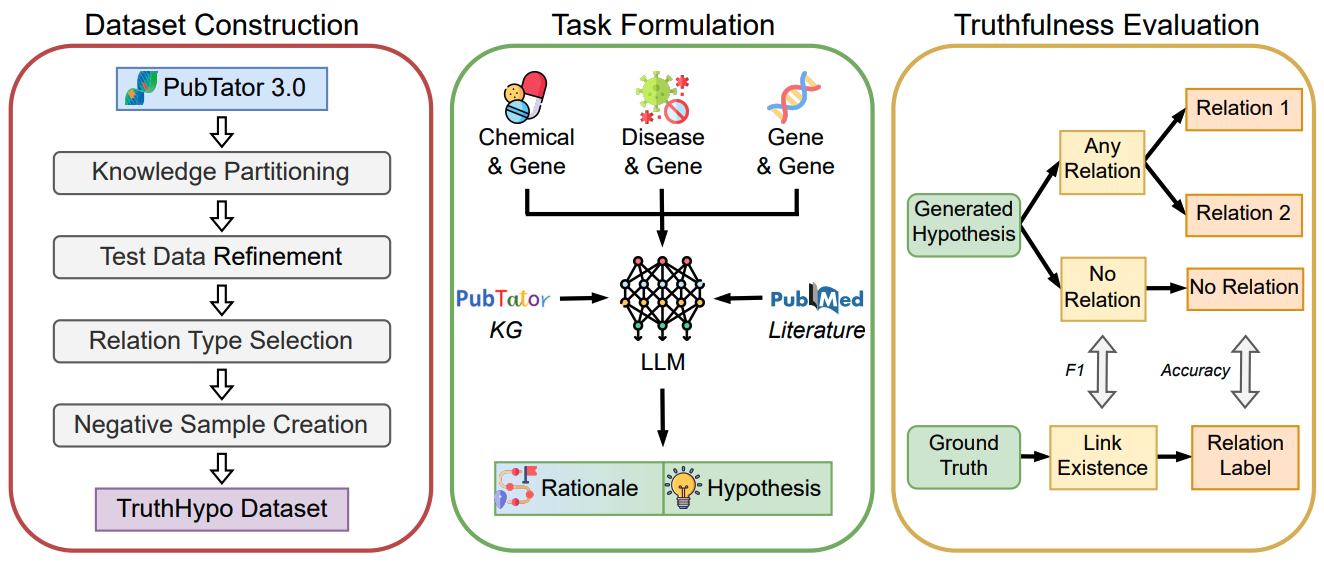
This paper focuses on the reliability of model-generated biomedical hypotheses, with particular attention to truthfulness and hallucination. It strengthens the agenda by asking not only whether models can generate hypotheses, but whether those hypotheses remain grounded and trustworthy.

Pipeline for reliable scientific hypothesis generation showing dataset construction, hypothesis generation task formulation, and truthfulness evaluation.

2024

Perspective 2024

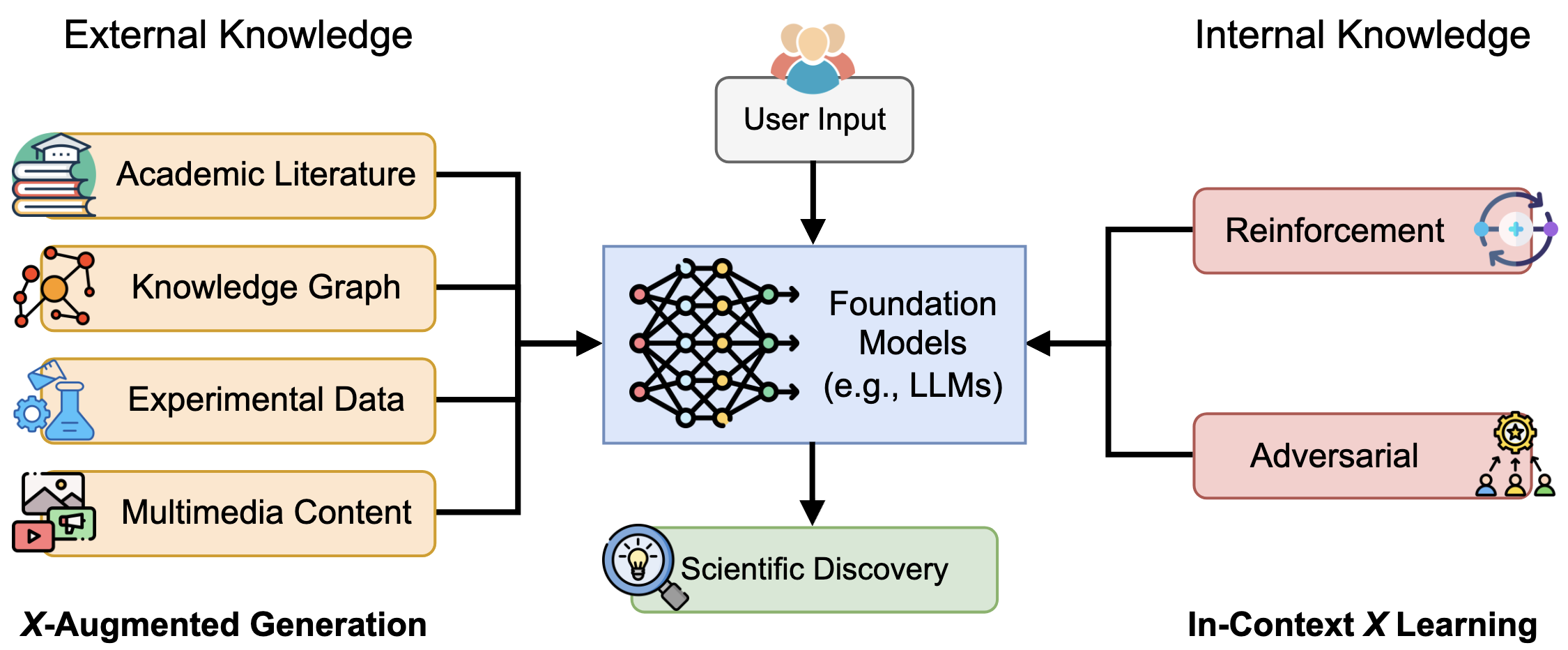
Embracing Foundation Models for Advancing Scientific Discovery

Sikun Guo, Amir Hassan Shariatmadari, Guangzhi Xiong and Aidong Zhang

IEEE BigData 2024

A perspective on how foundation models can reshape scientific discovery workflows. The paper situates hypothesis generation, knowledge use, and human–AI collaboration within a larger AI-for-science agenda.

2023

Survey 2023

Graph Neural Networks in IoT: A Survey

Guimin Dong, Mingyue Tang, Zhiyuan Wang, Jiechao Gao, Sikun Guo, Lihua Cai, Robert Gutierrez, Bradford Campbell, Laura E. Barnes and Mehdi Boukhechba

ACM Transactions on Sensor Networks

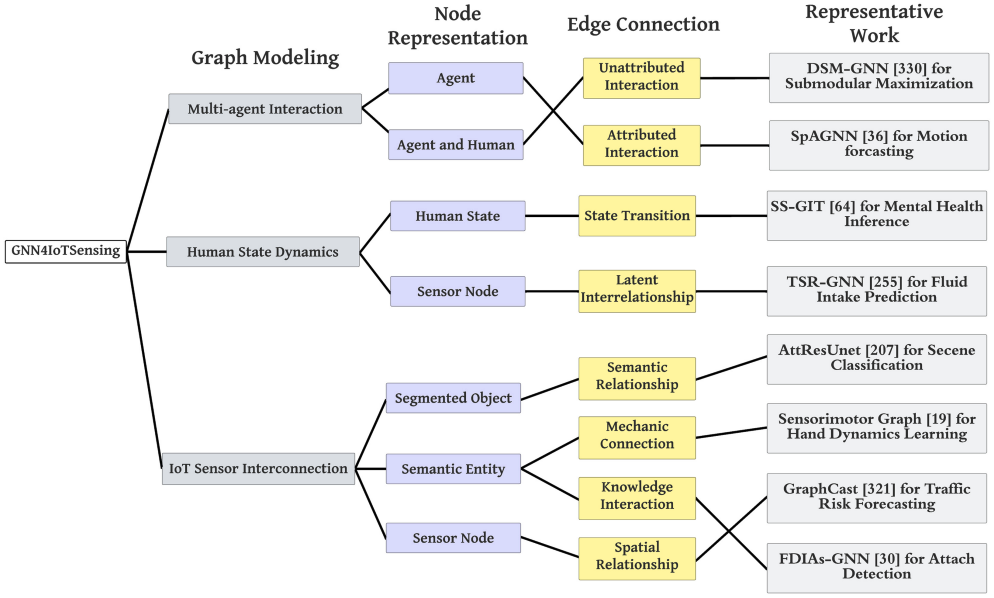
This survey organizes graph neural network research in IoT around graph modeling choices, node representations, edge semantics, and representative application settings. It reflects an earlier systems-and-graph-learning thread in my work that connects naturally to later interests in structured scientific knowledge.

Survey taxonomy for graph neural networks in IoT, covering graph modeling, node representation, edge connection, and representative work.

2020

Survey 2020

A Survey on GAT-like Graph Neural Networks

Sikun Guo

CISCE 2020

An early survey on graph attention network-style methods, reflecting the graph-learning thread that preceded later work on robust GNNs and structured scientific knowledge.